AREA OF EXPERTISE
Isotope identification, built into the spreader bar
OUR PRODUCT
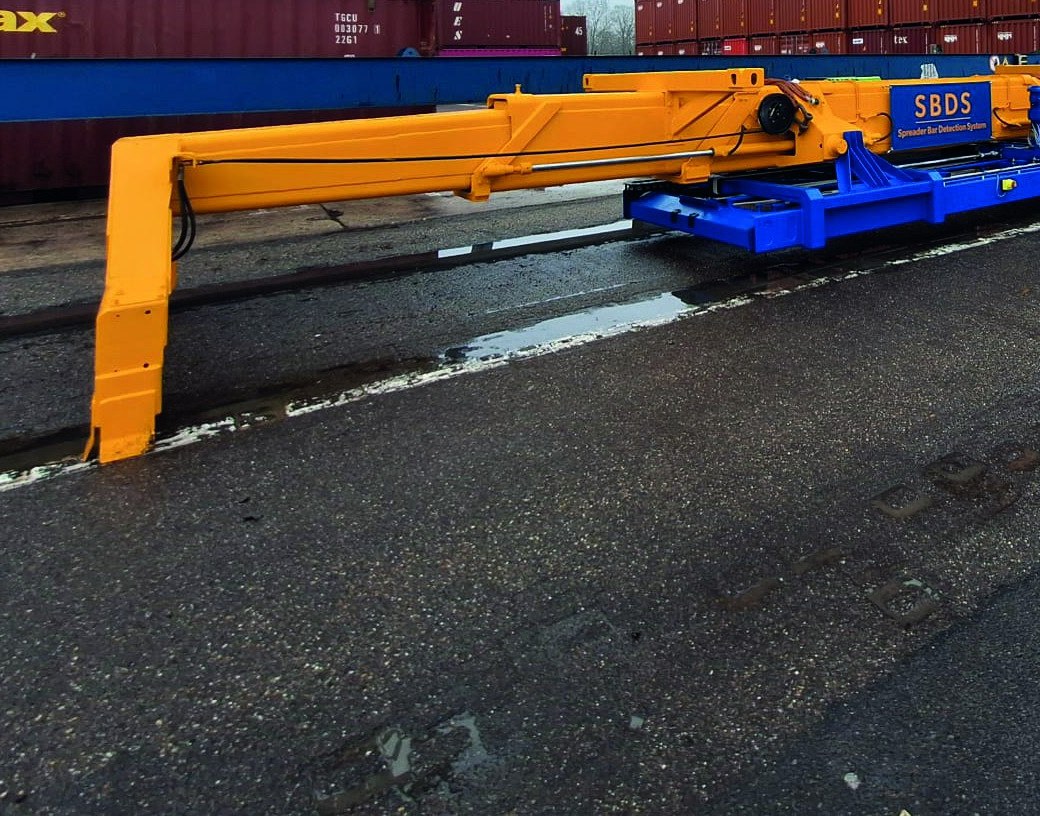
Undeclared Class 7 (radioactive) cargo is a blind spot in global logistics. Based on IAEA SSR-6, the IMDG Code and SOLAS (1974), the SBDS retrofits onto the spreader bar of a container crane, so that every container is automatically screened during normal handling: inline screening with isotope identification, and no added operational delay.
Every lift is a blind spot unless you can identify the isotope. Continuous monitoring across air, sea, rail and road prevents anxiety, work interruption, economic damage and loss of trust before they happen.
HOW IT WORKS
The detector cart rides on the spreader bar itself and scans the full length of the container during the lift. Nothing changes about how the terminal runs: no extra lane, no second handling and no operator action.
The spreader bar extends, locks onto the container and lifts it. The detector cart is already on board, so screening starts without anyone doing anything differently.
During the normal lift cycle of roughly 20–40 seconds, the detector cart travels the full length of the container, centimetres from its surface, and collects the gamma spectrum at every position along the box.
Crystal-based scintillation detectors resolve the energy peaks and name the isotope, separating harmless NORM such as potassium-40 from isotopes of concern such as caesium-137 and cobalt-60.
The result is a flagged container that comes with an answer attached, not a generic gamma alarm that still has to be investigated.
CAPABILITIES
Real-time isotope detection and classification, distinguishing genuine threats from harmless background radiation.
Every isotope emits gamma radiation at a characteristic energy. That energy is a fingerprint: it tells you what is inside the container, not just how much. Caesium-137 peaks at 662 keV, potassium-40 at 1460 keV. Standard radiation portal monitors measure gross count rate only and cannot tell the two apart, which is why they raise NORM false alarms on fertilizer and ceramics. The SBDS recognises the difference and leaves natural background radiation alone.
Detection hardware built directly into terminal equipment, scanning every container with zero added handling time.
The detector cart rides on the spreader bar itself. There is no separate lane, no second handling and nothing extra for the crane operator to do. During the normal lift cycle of 20 to 40 seconds the cart passes centimetres from the container wall along its full length: short distance, long measuring time, and low background out over the water. One system per crane is enough: every container the crane touches is screened.
One detection philosophy applied consistently across air, rail, road and maritime cargo chains.
The same detection philosophy applies to air, rail, road and sea freight. Radioactive material that falls out of regulatory control follows the logistics chain, and that chain is rarely purely maritime. Radensys builds on more than two decades of experience with radiation detection in the scrap, steel, waste and logistics sectors.
Engineered to IAEA SSR-6, IMDG Code and SOLAS (1974) requirements from the ground up.
The duty to keep misdeclared or undeclared Class 7 cargo out of the chain runs through binding international instruments: IAEA SSR-6 sets the safety requirements for transporting radioactive material, the IMDG Code translates them into mandatory rules for dangerous goods at sea, and SOLAS (1974) is the convention under which compliance is enforced. The SBDS is designed to meet those requirements without changing how the terminal works.
FAQ
By the energy of the gamma rays. Every isotope emits at its own characteristic energy: potassium-40, the natural radioactivity in fertilizer and ceramics, peaks at 1460 keV, while caesium-137 peaks at 662 keV. The SBDS resolves those peaks and names the isotope, so harmless NORM is cleared and a genuine source is flagged.
Yes. A normal lift cycle takes roughly 20 to 40 seconds, and during that time the SBDS detector cart travels along the container just centimetres from its surface. That combination of long measuring time and short distance is exactly what gamma spectrometry needs, so the lift itself becomes the screening moment.
Most portal monitors use plastic (PVT) scintillators that measure gross count rate but cannot resolve gamma energies well enough to identify the isotope. Any elevated reading looks the same to them, so naturally radioactive cargo such as fertilizer triggers the same alarm as a genuine source. The alternative is isotope identification at the first detection stage; the background is covered in our technical paper.
By putting the detector where every container already goes: the spreader bar. One SBDS per crane screens every container that crane touches during the normal lift, with no separate portal lane, no second handling and no operator action.